Line of Action Drawing
Finding movement before detail
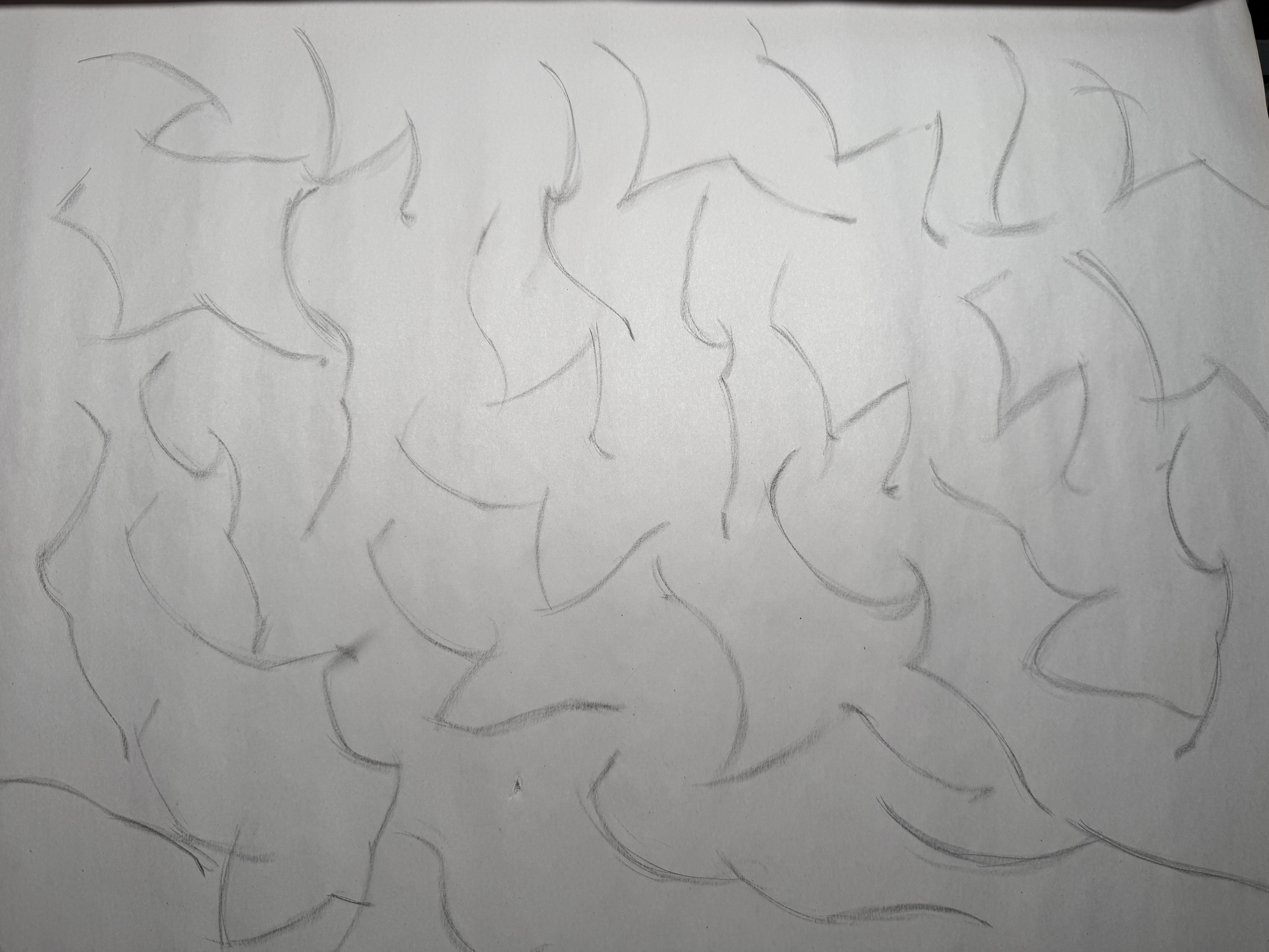
Line of action is a way of approaching figure drawing that focuses on movement rather than accuracy. It's an abstract line that describes how a figure moves through space, how it bends, leans, twists, or carries weight.
This line isn't meant to outline the body or describe anatomy. Its purpose is simpler. To capture the overall flow of the pose.
Because it's interpretive, there is no single correct line of action. Two artists can draw from the same pose and arrive at very different solutions. Both can be valid.
Visit our home page and sign in to unlock more pose sets and custom timing options.
Line of action and gesture
Line of action and gesture are closely related, but they aren't the same thing.
For a full breakdown, see gesture drawing vs figure drawing.
The line doesn't need to be continuous. It can be made of several marks. It doesn't need to follow the spine. It simply needs to describe the motion you see.
If it helps, drawing multiple lines of action from the same pose can reveal different interpretations of the movement.
Exaggeration and exploration
Some artists choose to push the movement slightly beyond what the pose shows. Exaggeration can clarify motion and help avoid stiffness.
If a pose tilts, you might tilt the line a bit more. If it stretches, you might extend it further. These choices aren't mistakes, they're part of exploring the pose.
Because line of action drawings are practice, not finished work, there's no need to erase. Drawing over existing lines often leads to clearer solutions.
There's No Single "Correct" Line of Action
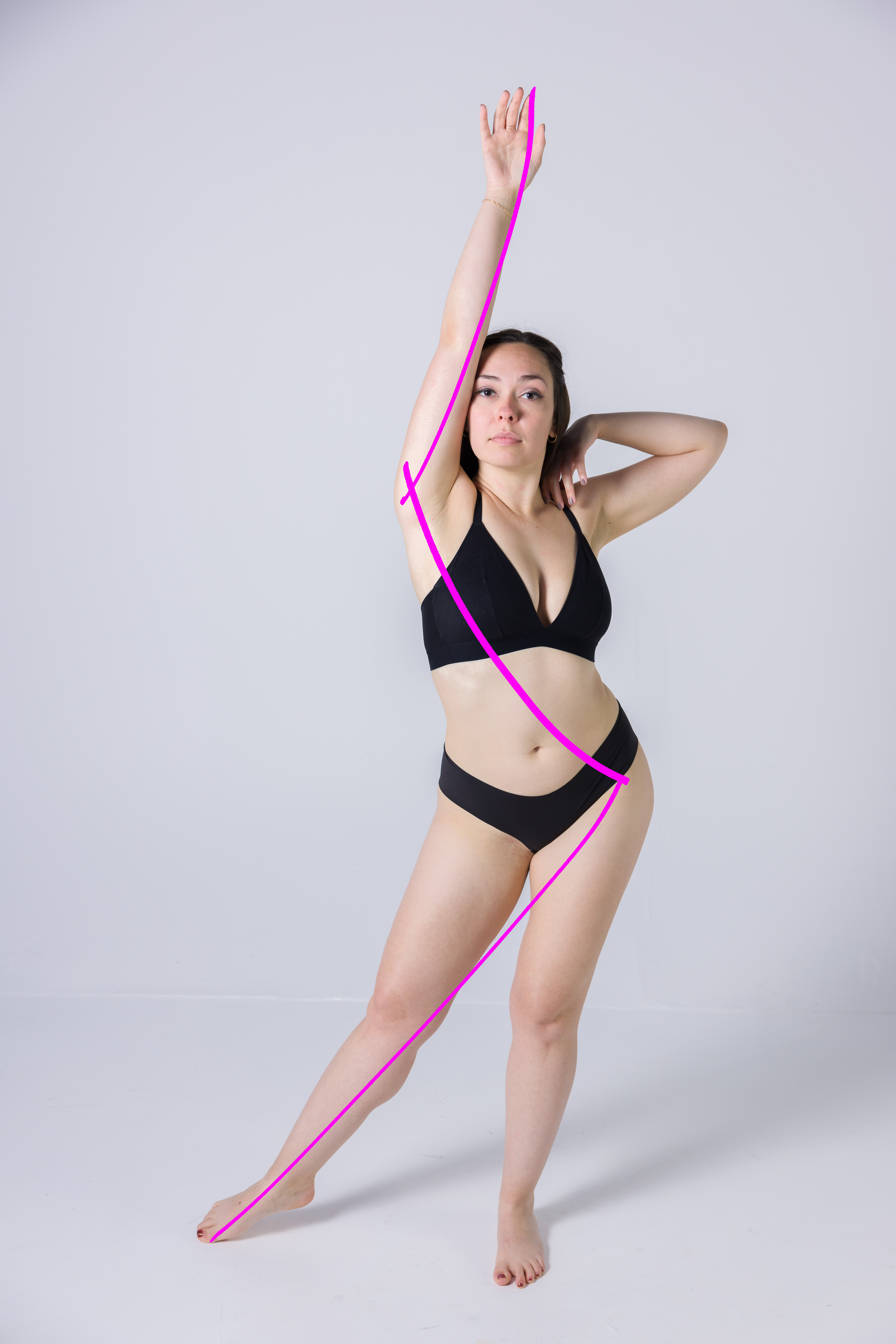
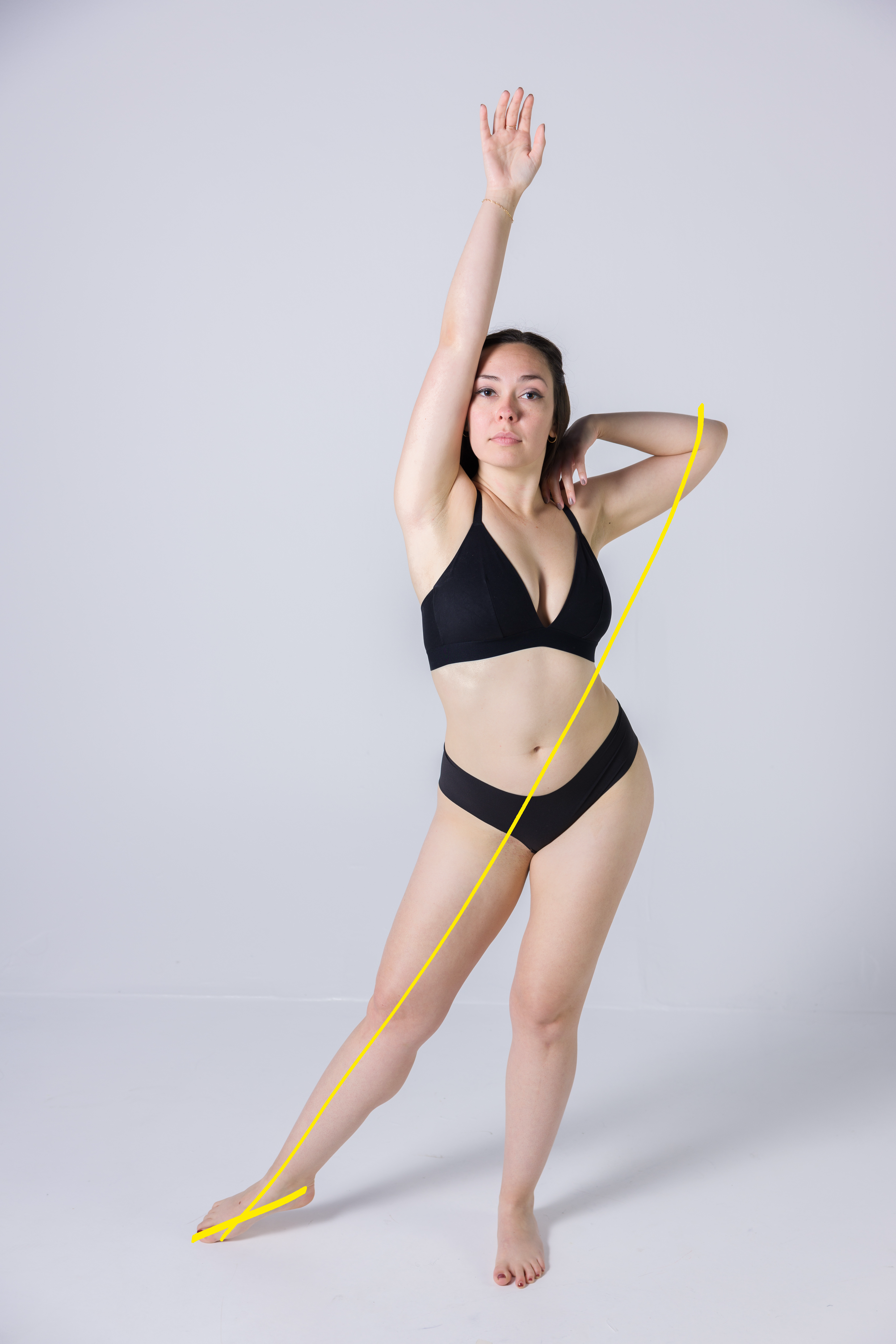
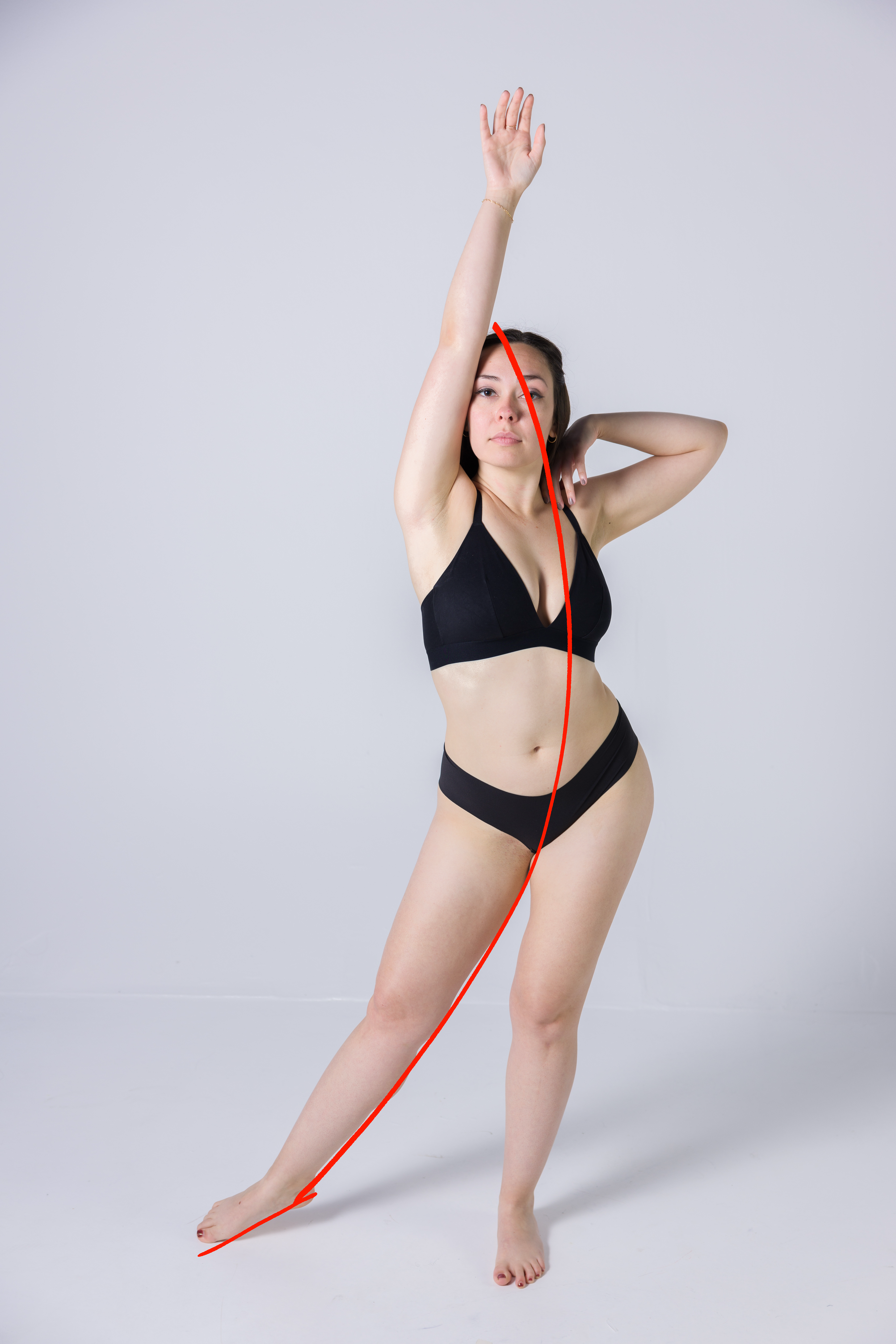
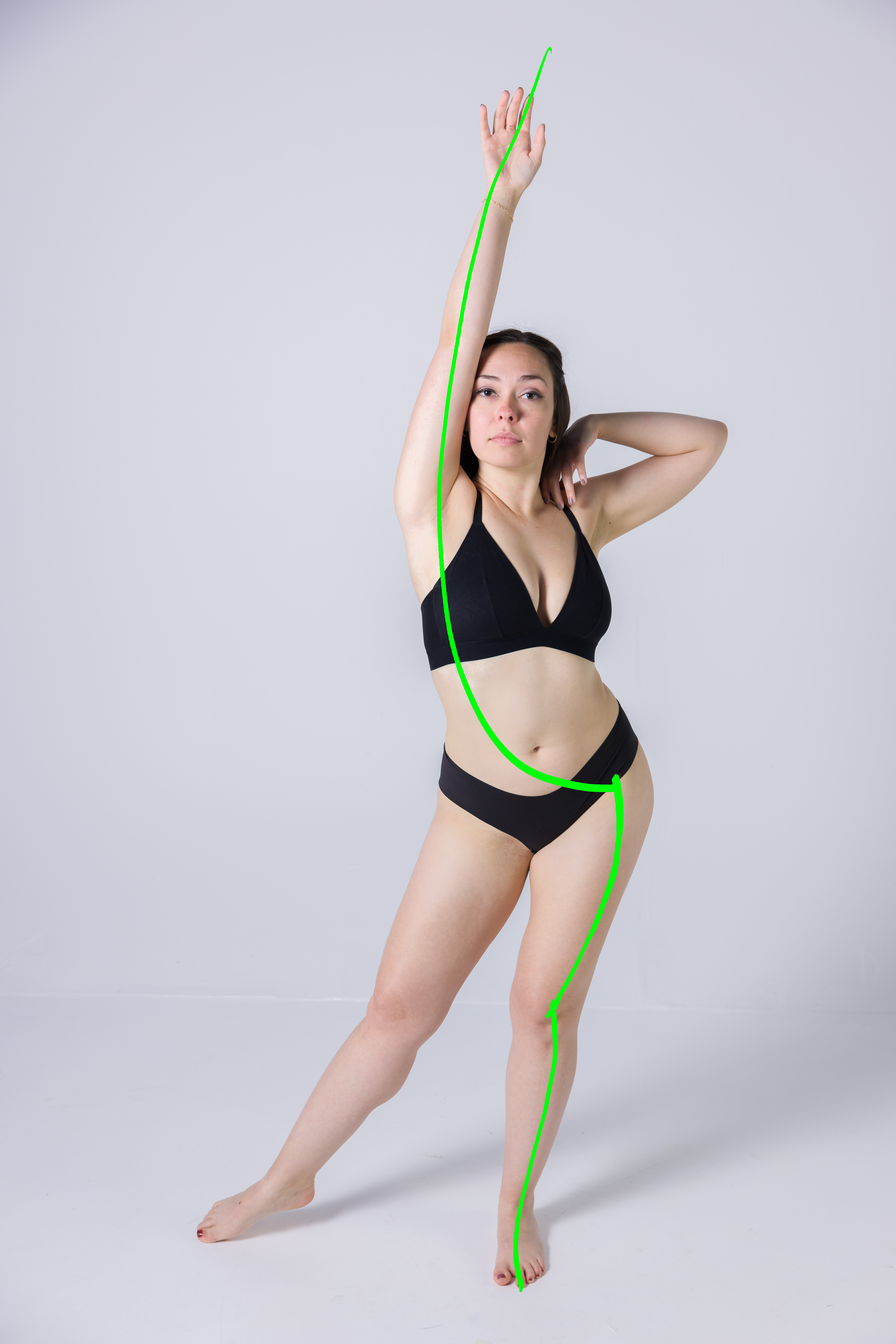
One important thing to remember. There isn't just one right answer.
If you ask ten artists to draw the line of action from the same pose, you'll probably get ten different results and that's a good thing.
Some artists might follow the longest curve running through the body. Others might focus on the weight-bearing leg. Some might respond to the tilt of the shoulders, the stretch of an arm, or the rhythm between the hips and ribcage.
All of these are valid.
The line of action isn't about finding a perfect anatomical solution, it's about capturing what feels most important in the pose.
Think of it as your personal response to the gesture.
As you practice, your eye will naturally start to notice different rhythms and pathways through the figure. Over time, your lines will become more confident, more expressive, and more intentional but they'll always be your interpretation.
That's the goal.
Using line of action as practice
Line of action drawing is often used as a warm up or daily exercise. The drawings are quick, loose, and sometimes awkward. That's expected.
Their value isn't in how they look, but in how they train your eye to recognize movement.
Line of action works best with short timed poses. For a breakdown of 30-second, 1-minute, and 2-minute gestures, see How Long Should Gesture Poses Be?
If your figures feel stiff or overworked, returning to line of action practice can help reintroduce flow and intent.
This same mindset can help you avoid copying outlines and focus on movement when drawing from photo references.