Gesture Drawing Practice
Capture movement, not details
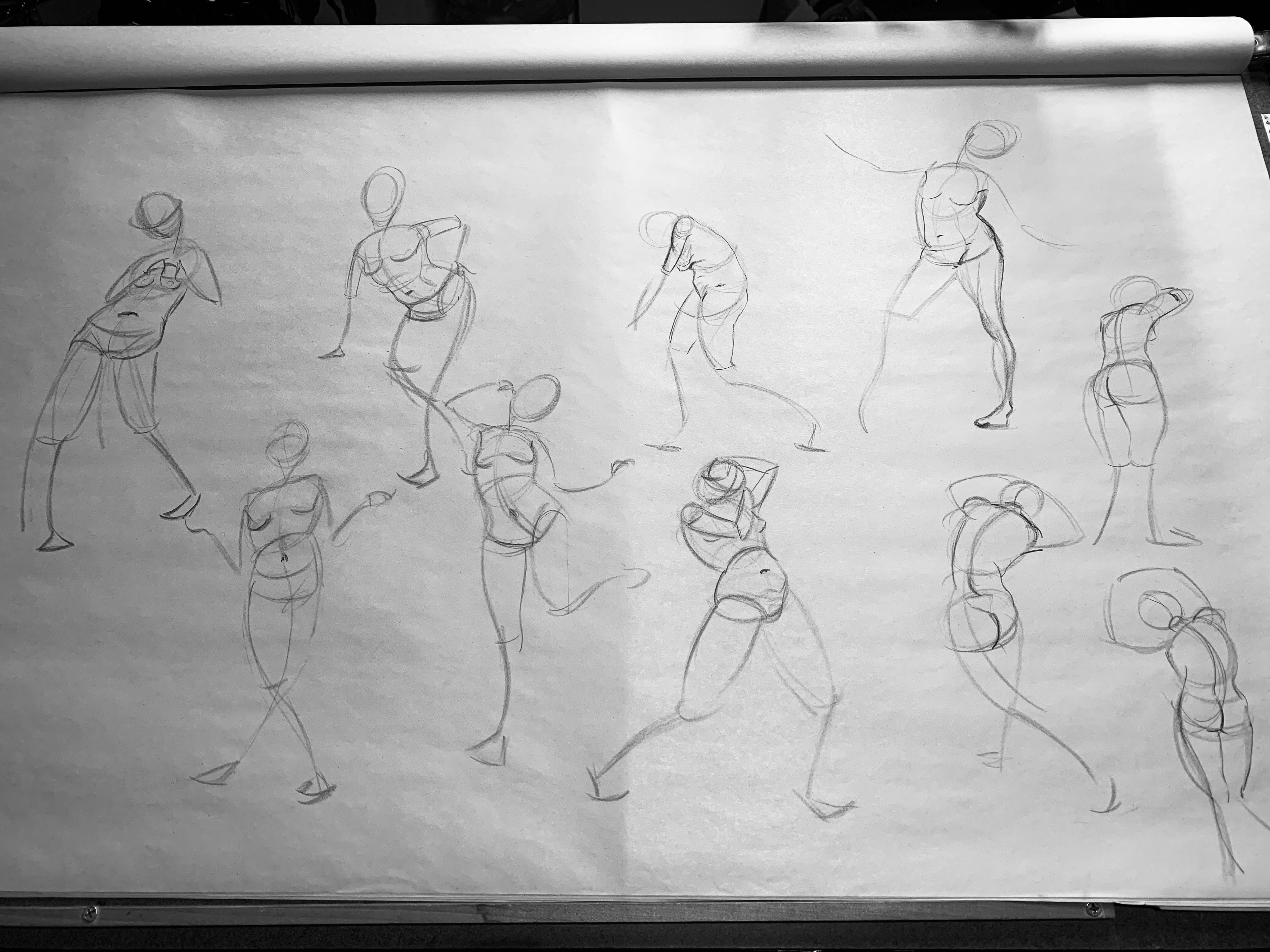
Gesture drawing is about capturing movement, energy, and flow quickly. The human figure is complex, and gesture helps us boil it down into something simple and easier to understand.
If you're new to figure drawing, gesture is one of the best places to start because it trains your eye to see the whole pose before getting lost in details.
If you're still sorting out gesture drawing vs figure drawing, this companion guide explains when to use each approach.
In this article, we'll walk through a simple way to practice gesture drawing using timed poses.
Visit our home page and sign in to unlock more pose sets and custom timing options.
What Is Gesture Drawing?
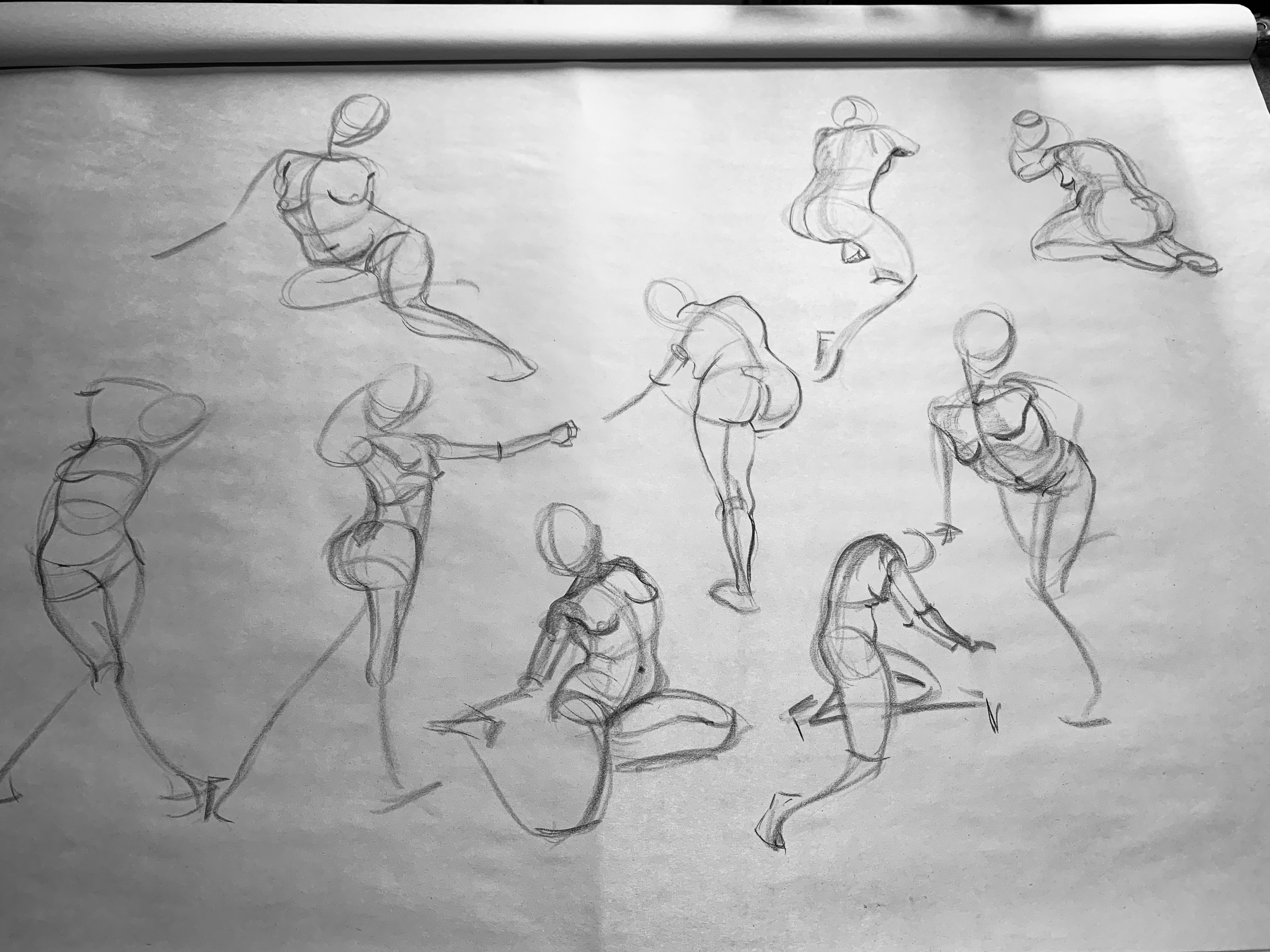
Gesture drawing focuses on the overall action of the pose, not the outlines.
Instead of drawing every contour, you're looking for:
- the main line of movement
- weight shifts
- balance
- rhythm through the body
Think of it as drawing how the pose feels, not how it looks.
Most gesture drawings take between 30 seconds and 2 minutes. Short time limits force you to stay loose and focus on the big ideas.
If you're unsure how long each pose should be, see How Long Should Gesture Poses Be?.
Start With the Line of Action
A great way to begin each pose is by finding the line of action.
This is an imaginary line that runs through the body and shows the primary direction of movement.
Take 10 to 20 seconds to observe the pose before you start drawing. Ask yourself: What stands out about this pose?
It could be something like:
- "I like the way the hips are pushing outward."
- "There's a nice S curve in the spine."
- "I see a strong C curve from the shoulder down to the toe."
That's it. Start there. Don't overthink it. Now record that observation with a single action line.
When in doubt, blur it out.
If you're having a hard time simplifying the pose into one clear idea, try squinting your eyes. Squinting reduces distracting details and helps you focus on the big picture.

Keep It Simple
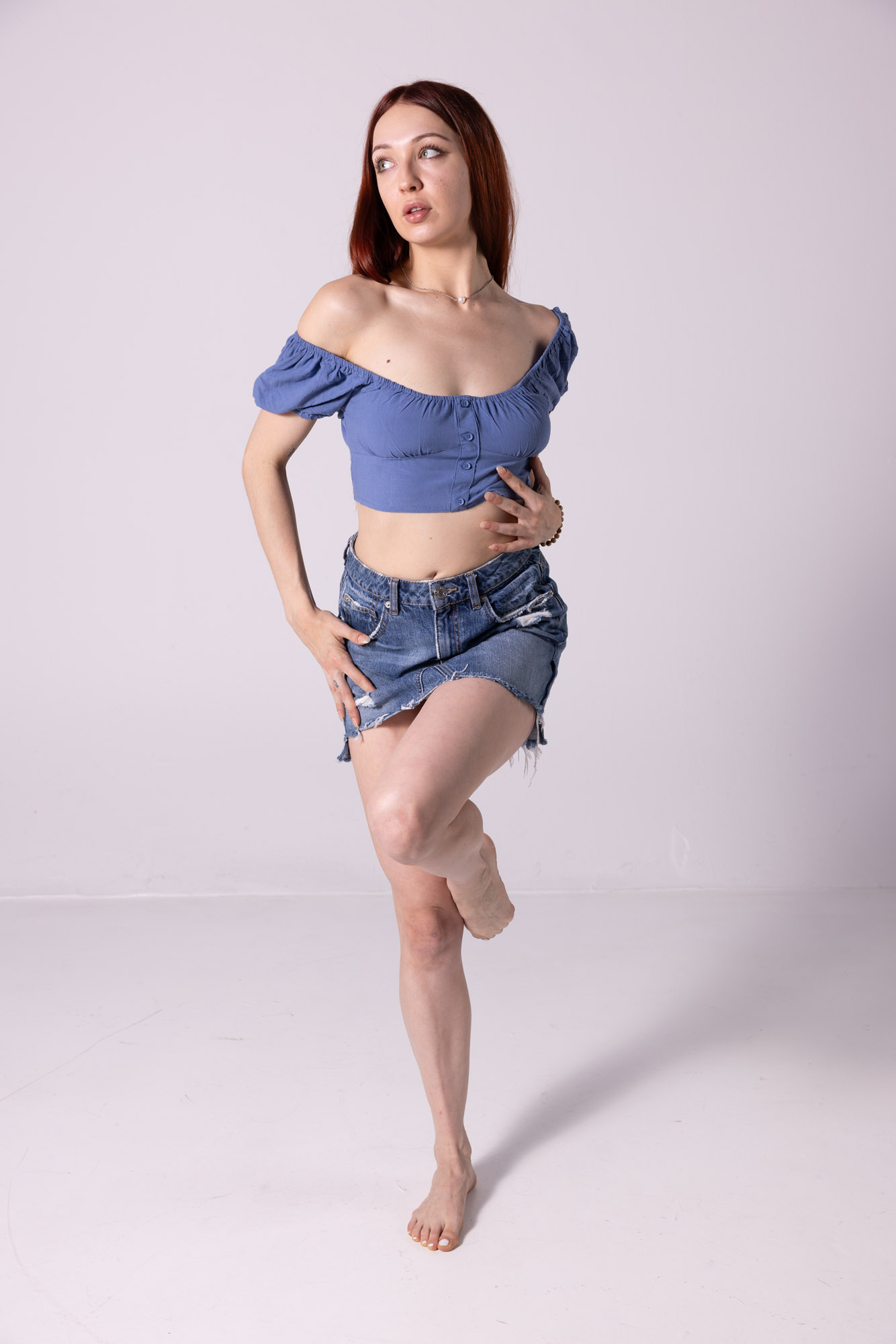
For beginner gesture practice, try this approach:
- draw the line of action
- add simple shapes for the ribcage and pelvis
- indicate arms and legs with loose lines
- move on
Don't erase.
Each drawing is just a quick exploration.
You're training observation and flow, not creating finished artwork.
There Is No "Correct" Gesture
Gesture drawing is subjective.
Two artists can look at the same pose and draw completely different gestures, and both can be right.
Trust your eye. Gesture drawing is about personal interpretation, not copying.
A Simple Timed Practice
Here's an easy daily routine:
- 5 poses at 30 seconds
- 5 poses at 1 minute
- 5 poses at 2 minutes
Short sessions done consistently are far more effective than long sessions done occasionally.
If you want a quick overview of how the timer-based workflow fits together, read Timed Pose Reference.